June 21, 2026
If you’re a man reading this. You don’t have to be in an emergency situation to ask for help. You can ask for help before that situation as well. Whatever you’re carrying right now — this space is for you.
If you’re a young boy or teen reading this Your feelings are real, and they matter. Talking to someone isn’t embarrassing — it’s one of the strongest things you can do. You are not alone. Asking for help isn’t a sign of weakness — it’s one of the most courageous things a man can do.
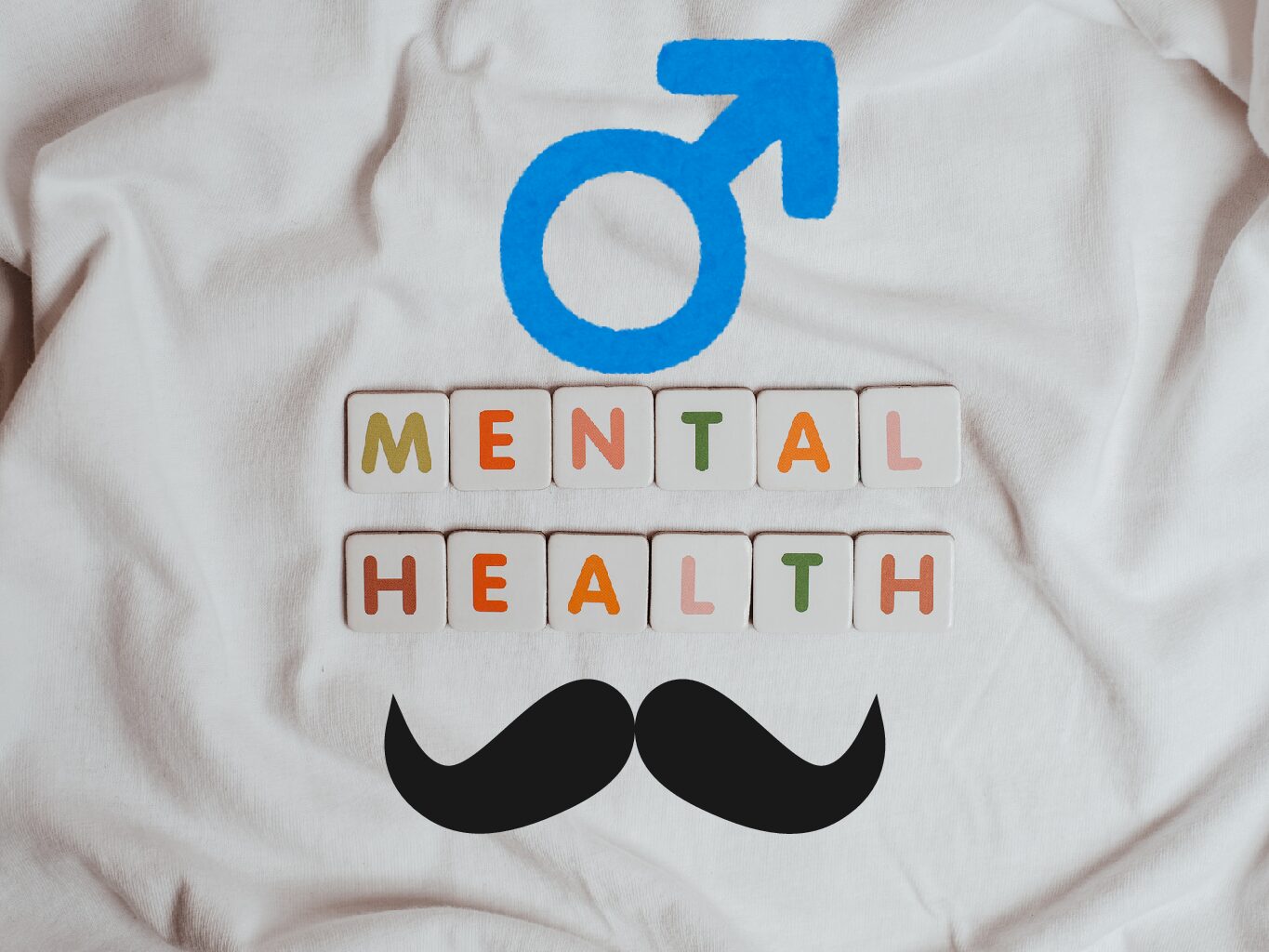
This month, we honor both Men’s Mental Health Month and Father’s Day by starting the conversation that matters most. June is designated, Men’s Mental Health Month in a recognition that the mental health conversation has a gender gap, and that requires intentional effort from all of us. Men die by suicide at nearly four times as compared to rate of women. They’re less likely to be diagnosed, less likely to seek help, and more likely to suffer in silence until a crisis forces them to take an action.
1 in 5 men experience a mental health condition each year — yet most never seek treatment
40% of men report they’ve never spoken to anyone about their mental health
This month isn’t about guilt or statistics — it’s about permission. Permission to take your mental health seriously. Permission to tell someone you’re not okay. Permission to ask for support without having to justify it. Every June, Men’s Mental Health Month shines a light on a quiet crisis — millions of men struggling in silence, convinced that reaching out for support means they’ve somehow failed. Think about the messages men receive from the time they’re young: “toughen up,” “walk it off,” “boys don’t cry.” These aren’t just passing phrases — they become internalized scripts that shape how men relate to their own emotions for the rest of their lives.
The result? Men are significantly less likely than women to seek mental health support, even when they’re struggling just as much — or more. And in a culture that equates emotional stoicism with strength, that gap is costing lives.
This June, we’re calling that out directly. Therapy isn’t a last resort or a sign of weakness. For millions of men, it’s the thing that changed everything.
Let’s talk about THE MYTHS together:
The Lies We Tell Men About Strength
Before we can talk about solutions, we need to name the barriers. The stigma around men’s mental health isn’t imaginary — it’s been built brick by brick, by cultural norms, media portrayals, and generations of “man up” messaging.
Myth “Needing therapy means I’m broken or weak.”
The truth: Therapy is a tool for growth, not a diagnosis of failure. Athletes have coaches. CEOs have advisors. High-functioning people seek support — that’s what makes them high-functioning.
Myth “I need to handle this on my own.”
The truth: There’s no prize for suffering alone. Managing everything in isolation isn’t strength — it’s an impossible standard that leaves men exhausted, disconnected, and stuck.
Myth “Therapy is just talking about your feelings — that’s not for me.”
The truth: Modern therapy is practical, goal-oriented, and skills-based. Many men prefer approaches like CBT or solution-focused therapy that emphasize tangible strategies and outcomes.
Myth “No one understands what I’m going through.”
The truth: A skilled therapist meets you exactly where you are. Many men are surprised by how quickly they feel understood — often for the first time.
SIGNS TO WATCH FOR
When Life Is Telling You Something
Men often experience emotional distress differently than it’s traditionally described. Probably naming it as sadness or anxiety, the signs tend to show up in behavior — and it is easy to rationalize them away.
Seek a professional support if you notice:
- Irritability, anger, or short fuse that seems out of proportion
- Withdrawing from people you care about or activities you used to enjoy
- Using alcohol, work, exercise, or screens to avoid how you feel
- Persistent fatigue or a sense that nothing feels meaningful anymore
- Trouble sleeping, concentrating, or feeling difficulty in your relationships
- A low-grade sense that something is wrong — even if you can’t name it
“You don’t need to be in a critical life situation to benefit from therapy. Many men come in simply because they want to be better — a better partner, father, leader, or version of themselves.”
WHAT TO EXPECT
What Therapy Actually Looks Like for Men
One of the biggest fears is not knowing what happens in the room. The unknown can feel riskier than the familiar pain. So let’s demystify it.
- It starts with a conversation — not an interrogation
The first session is about getting to know you: what’s going on, what you’ve tried, what you’re hoping for. There’s no pressure to open floodgates on day one. You set the pace.
2. You may not know or be good at emotions to benefit
Many men come in saying “I’m not sure I even know what I feel.” That’s completely fine — and actually very common. Part of what therapy offers is a language and framework for understanding your inner experience, built gradually over time.
3. Results are real and measurable
Therapy produces outcomes like better communication in relationships, fewer anxiety spirals, more clarity in decision-making, more energy. It’s not indefinite or vague — it’s purposeful.
The men who show up, even reluctantly, often say the same thing afterward: “I wish I’d done this sooner.”
To the Dads Reading This
Father’s Day falls every June — and this year, it lands along with Men’s Mental Health Month. That’s not a coincidence worth ignoring.
Fatherhood is one of the most identity-shifting experiences a man can go through. The weight of it — the love, the fear, the pressure to show up perfectly — is enormous. And yet, most dads carry that quietly, alone, because “that’s what dads do.”
“The most powerful thing a father can model for his children isn’t toughness. It’s the courage to take care of himself — so he can truly show up for them.”
What therapy can do for fathers
Many dads come to therapy not because they’re falling apart, but because they want to be more present — less reactive at home, less distracted, more emotionally available to their kids. Therapy helps with that. It helps with the guilt of not being “enough.” The grief of a childhood you didn’t have. The fear of repeating patterns you don’t want to repeat.
Breaking the cycle starts with you
Research consistently shows that a father’s emotional health directly impacts his children’s development — their sense of security, their ability to regulate emotions, even their long-term mental health. Doing this work isn’t just for you. It ripples outward.
This Father’s Day: Give yourself the gift of support. Not because you’ve failed — but because you matter too. The best version of you is available, and it starts with one conversation.
For Young boy & Teens
If you’re a boy or teenager reading this — maybe you stumbled here, maybe someone sent it to you — we want to speak to you directly.
You’ve probably heard that boys don’t cry. That you need to be tough. They don’t show their emotions. Those messages are unhelpful. The boys who learn to understand their feelings, talk about what’s hard, and ask for help when they need it? They grow into men who are stronger, kinder, and more grounded — in their friendships, their work, and their families.
Talking about how you feel isn’t weak and requires more courage.
Mental health is as real as physical health. You wouldn’t ignore a broken arm. Finding support early from a counselor, therapist, or trusted adult changes your whole trajectory. If something feels heavy right now at home, at school, inside your own head, please tell someone: a parent, a coach, a teacher, or a counselor. You don’t have to manage it. And you are absolutely not the only one who feels this way.
Reaching out takes courage. A 15-minute consultation is a no-pressure way to see if therapy might be right for you.